Chery Confident Car Sales Will Grow in 2026, Here's Why
30 January 2026, 19:00 WIB
The government states it has not yet received an official proposal regarding automotive incentives for 2026 from the relevant ministry.

By Adi Hidayat
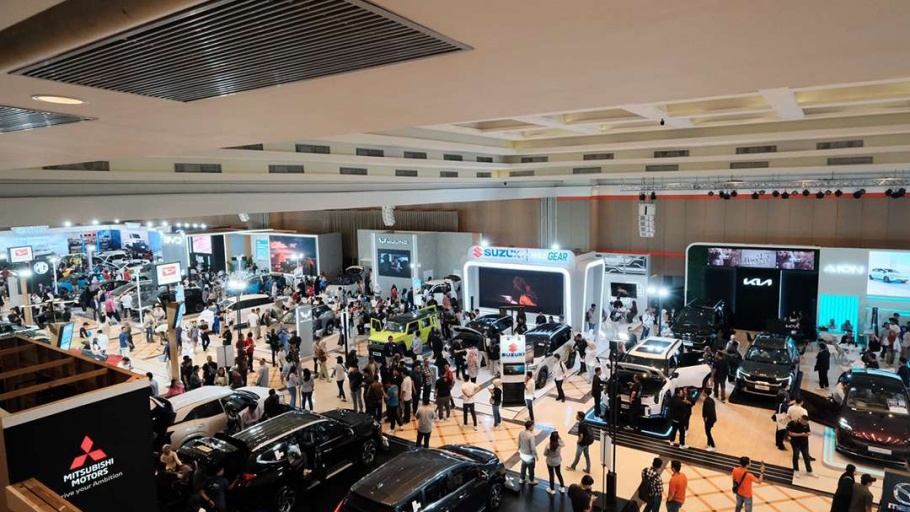
KatadataOTO – Recently, the Indonesian automotive market has been under continuous pressure. In fact, car sales are now below 1 million units.
As a result, its position as the largest market in Southeast Asia is threatened by Malaysia, which continues to experience growth. This is not unrelated to the government's strategy of continuously providing incentives.
Automotive industry players in the country hope the government can do the same. So that vehicle sales can return to normal.
However, Haryo Limanseto, Spokesperson for the Coordinating Ministry for Economic Affairs, revealed that his party has not yet received an official proposal regarding automotive incentives in 2026.
"Currently, we have not had further discussions and have not received any incentive proposals from the Ministries/Institutions overseeing the sector," said Haryo.
He also revealed that the government's future policy direction for the automotive industry will focus more on several things. Starting from strengthening the local value chain, increasing the Domestic Component Level (TKDN), developing electric vehicle charging infrastructure, supporting technology transfer, to increasing national production capacity.
According to Haryo, the discussion of incentives for the automotive industry in 2026 needs to consider the latest developments in the national industry.
Based on government data, in recent years the automotive industry has shown strengthening. The growth of electric vehicles and significant investment realization are proof that the industry's foundation is getting stronger.
“The automotive industry is now quite strong. This is evidenced by an 18.27 percent increase in electric car sales and an investment for KBLBB (Battery-Based Electric Motor Vehicles) of IDR 5.66 trillion in 2025,” said Haryo.
On the other hand, the conventional vehicle segment still dominates the market at around 80.6 percent. Meanwhile, the motorcycle market also continues to show growth in terms of both domestic demand and exports.
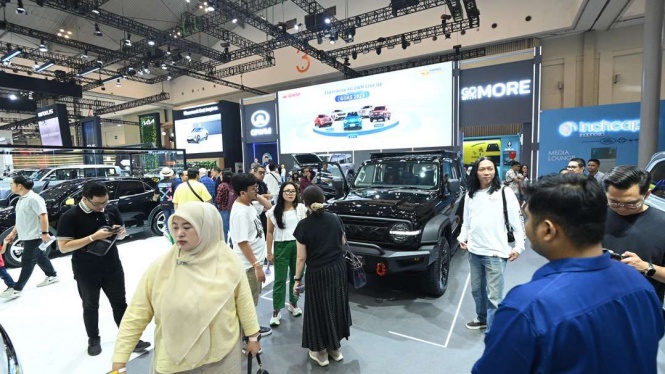
This development shows that the automotive industry ecosystem has become stable and competitive. With this condition, the government believes that policy space can be allocated more strategically.
“Are incentives still needed if an industry is already strong enough? We believe it's time to consider strengthening other priority sectors that require greater support,” he concluded.
Related Articles
30 January 2026, 19:00 WIB
27 January 2026, 16:00 WIB
27 January 2026, 08:00 WIB
24 January 2026, 13:00 WIB
15 January 2026, 12:00 WIB
Latest
02 February 2026, 10:00 WIB
Sales are trailing competitors, and MG declined to elaborate on its sales target for 2026.
02 February 2026, 09:00 WIB
Chery hybrid cars offer more benefits to consumers in Indonesia, making them a popular choice.
02 February 2026, 08:00 WIB
The Police launched Operation Keselamatan Jaya 2026 to curb the number of accidents and traffic violations on the roads.
02 February 2026, 07:00 WIB
Yamaha is confident that the target set by AISI can be achieved this year, with several conditions.
01 February 2026, 17:17 WIB
Toyota FT 86, Vespa Corsa 125, and Toyota Alphard are three of Reza Arap's many vehicles.
01 February 2026, 15:00 WIB
Shell, BP AKR, and Vivo lowered fuel prices for the February 2026 period by varying amounts.
01 February 2026, 13:00 WIB
Toyota Motor Corporation is paying closer attention to its sales in Indonesia, which have significantly declined.
01 February 2026, 11:00 WIB
Toyota group sales break a new record and become the world's best-selling manufacturer in 2025, surpassing Volkswagen.