Toyota Wary of Geopolitical Crisis Impact on Automotive Industry
10 January 2026, 09:30 WIB
The government is directing local industries that supply automotive components to manufacture parts for other sectors.

By Adi Hidayat
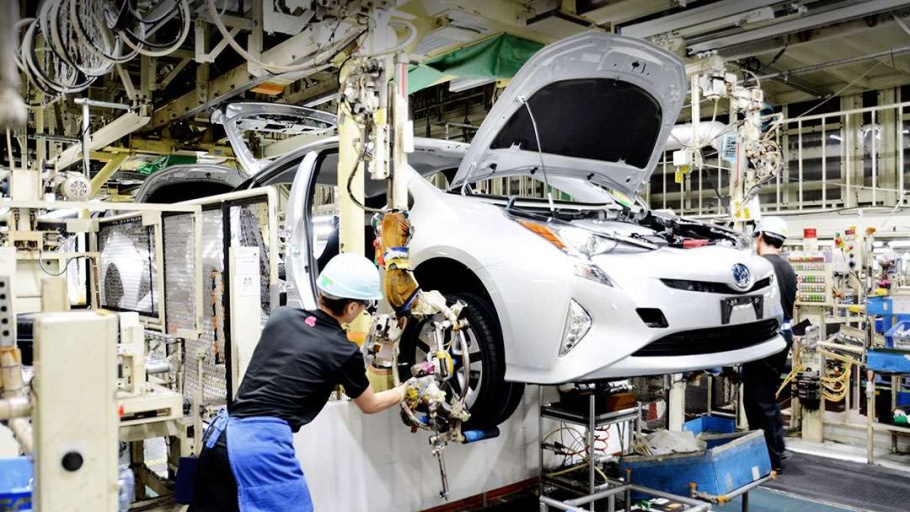
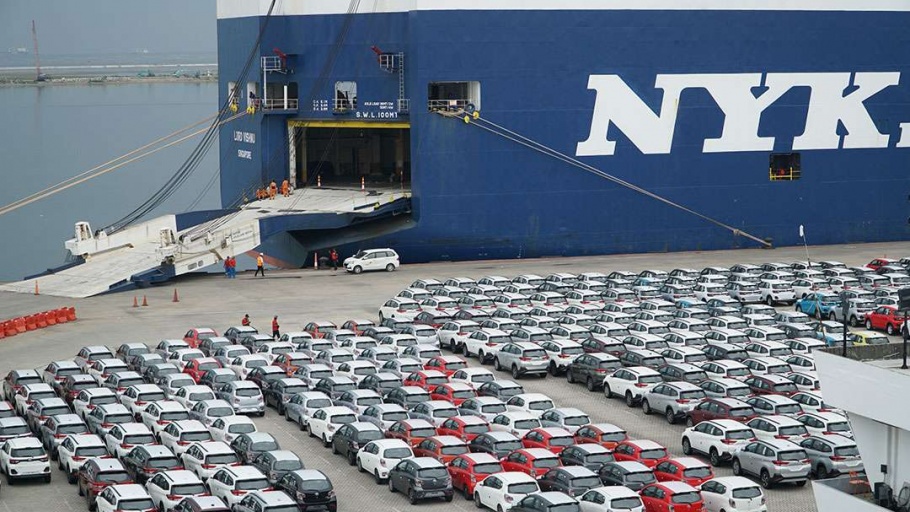
KatadataOTO – Electric cars imported directly by a number of vehicle manufacturers have apparently had a major impact on the local industry in the component sector. This is because the units arrive completely built-up, so they do not need to use parts from the country.
This situation is recognized by the government as the policymaker. Several efforts have been prepared to avoid greater pressure and to ensure the component industry can survive.
“There are certainly (protests from the component industry), but if you look at it, the production of conventional and electric vehicles is already different. The presence of new investment in EVs means we will face the challenge of change, so a transition is needed,” said Setia Diarta, Director General of Metal, Machinery, Transportation Equipment, and Electronics Industry (ILMATE) of the Indonesian Ministry of Industry.
However, he mentioned that the production of conventional vehicles is still very large. Therefore, it is hoped that component manufacturers can still adapt.

“But for conventional cars, so far, they still use many domestic components,” he added.
Not only that, he also revealed that the component industry should not only depend on the car market. The government is even trying to provide solutions so that the production output of Indonesian manufacturers can be used by other sectors.
"We are also trying to encourage component production to start joining the aerospace industry ecosystem, such as for airplanes and ships. Technologically, it's almost the same because it requires a high level of precision,” he emphasized.
It was previously reported that the CBU electric car incentives provided by the government have slowed down domestic vehicle production. This is because many companies prefer to bring in completely built-up units rather than manufacturing them in the country.
“Now, electric car imports are at 63 percent, whereas in 2024 it was (only) 40 percent,” said Riyanto, an automotive observer and researcher at LPEM FEB UI in Jakarta recently.

The surge in the population of imported electric cars proves that Indonesia is becoming increasingly dependent on products from abroad.
Meanwhile, the domestic automotive industry is still far from optimal. Thus, this situation has the potential to create a market imbalance.
“Going forward, if this continues, imported BEVs will eventually dominate. This means that the installed capacity for domestic production will go unused,” he emphasized.
Related Articles
10 January 2026, 09:30 WIB
05 January 2026, 09:00 WIB
01 December 2025, 12:00 WIB
06 November 2025, 20:00 WIB
12 August 2025, 14:00 WIB
Latest
02 February 2026, 10:00 WIB
Sales are trailing competitors, and MG declined to elaborate on its sales target for 2026.
02 February 2026, 09:00 WIB
Chery hybrid cars offer more benefits to consumers in Indonesia, making them a popular choice.
02 February 2026, 08:00 WIB
The Police launched Operation Keselamatan Jaya 2026 to curb the number of accidents and traffic violations on the roads.
02 February 2026, 07:00 WIB
Yamaha is confident that the target set by AISI can be achieved this year, with several conditions.
01 February 2026, 17:17 WIB
Toyota FT 86, Vespa Corsa 125, and Toyota Alphard are three of Reza Arap's many vehicles.
01 February 2026, 15:00 WIB
Shell, BP AKR, and Vivo lowered fuel prices for the February 2026 period by varying amounts.
01 February 2026, 13:00 WIB
Toyota Motor Corporation is paying closer attention to its sales in Indonesia, which have significantly declined.
01 February 2026, 11:00 WIB
Toyota group sales break a new record and become the world's best-selling manufacturer in 2025, surpassing Volkswagen.