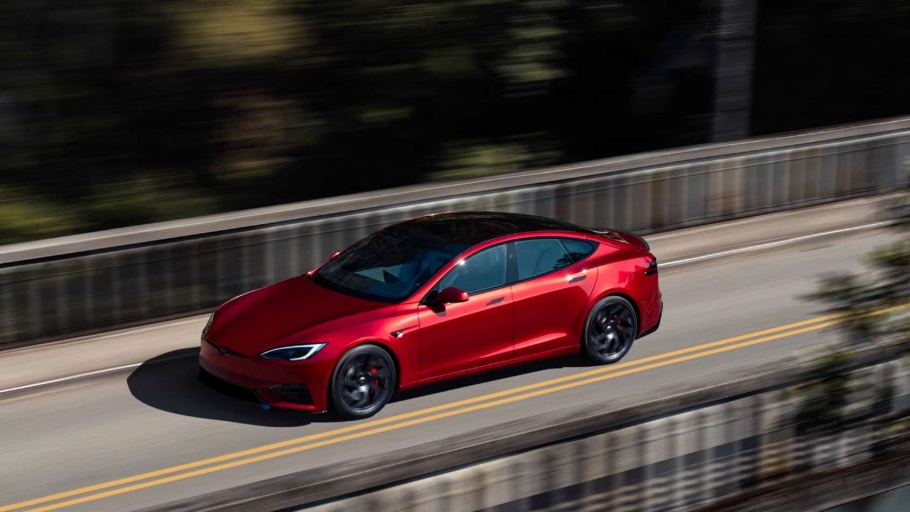
Tesla Model S and X Production Halted, Elon Musk Opts to Build Robots
01 February 2026, 09:00 WIB
The new BYD Seal 2025 features a DiSus-C suspension system that adapts to road surface conditions; here's how it works.


KatadataOTO – Just about 1 year after its launch in Indonesia, which garnered significant attention, BYD has immediately updated the New BYD Seal 2025. The focus of the changes is on their self-developed intelligent suspension system, DiSus-C.
For your information, DiSus is an intelligent body control system and is considered one of the most advanced today. This system is designed to manage the car's movement in various conditions, whether lateral, longitudinal, or vertical.
The goal, of course, is to improve stability and comfort in various driving conditions. DiSus itself is divided into 3 main components, each with capabilities in various aspects of vehicle dynamics.
First, DiSus-C (Intelligent Damping Body Control System), works to enhance vehicle comfort. This system relies on damper solenoid valves in the suspension system. It can respond to road conditions dynamically.

Second, DiSus-A (Intelligent Air Body Control System), works like an air suspension that can adjust the vehicle's height by up to 150 mm. This system ensures the vehicle adapts to various conditions and speeds.
Third, DiSus-P (Intelligent Hydraulic Body Control System), is the most advanced system, controlling the hydraulic elements of the suspension. It works responsively, adapting during maneuvers. Under sharp acceleration or cornering, it spontaneously increases stiffness for much better control and stability.
KatadataOTO had the opportunity to test the DiSus-C system installed on the New BYD Seal 2025 Performance variant. In general, thanks to its ability to detect road conditions quickly, this car can make real-time suspension adjustments.

Potential excessive bumps when going over uneven surfaces can be optimally dampened. As a result, passenger comfort is maintained, and negative driving symptoms like excessive bouncing and body roll are well-reduced, which certainly provides an advantage in terms of vehicle control and stability.
Additionally, during sudden braking at fairly high speeds, brake dive is also well-controlled. This means that even when the front of the car is pushed down significantly when the brakes are applied, the car remains controllable.
Related Articles
01 February 2026, 09:00 WIB
31 January 2026, 19:00 WIB
31 January 2026, 17:00 WIB
31 January 2026, 15:00 WIB
30 January 2026, 18:00 WIB
Latest
02 February 2026, 10:00 WIB
Sales are trailing competitors, and MG declined to elaborate on its sales target for 2026.
02 February 2026, 09:00 WIB
Chery hybrid cars offer more benefits to consumers in Indonesia, making them a popular choice.
02 February 2026, 08:00 WIB
The Police launched Operation Keselamatan Jaya 2026 to curb the number of accidents and traffic violations on the roads.
02 February 2026, 07:00 WIB
Yamaha is confident that the target set by AISI can be achieved this year, with several conditions.
01 February 2026, 17:17 WIB
Toyota FT 86, Vespa Corsa 125, and Toyota Alphard are three of Reza Arap's many vehicles.
01 February 2026, 15:00 WIB
Shell, BP AKR, and Vivo lowered fuel prices for the February 2026 period by varying amounts.
01 February 2026, 13:00 WIB
Toyota Motor Corporation is paying closer attention to its sales in Indonesia, which have significantly declined.
01 February 2026, 11:00 WIB
Toyota group sales break a new record and become the world's best-selling manufacturer in 2025, surpassing Volkswagen.