List of Regions Offering Vehicle Tax Amnesty in Early 2026
13 January 2026, 16:00 WIB
The motor vehicle tax amnesty program in Banten starts today, but a significant risk awaits.


By Adi Hidayat
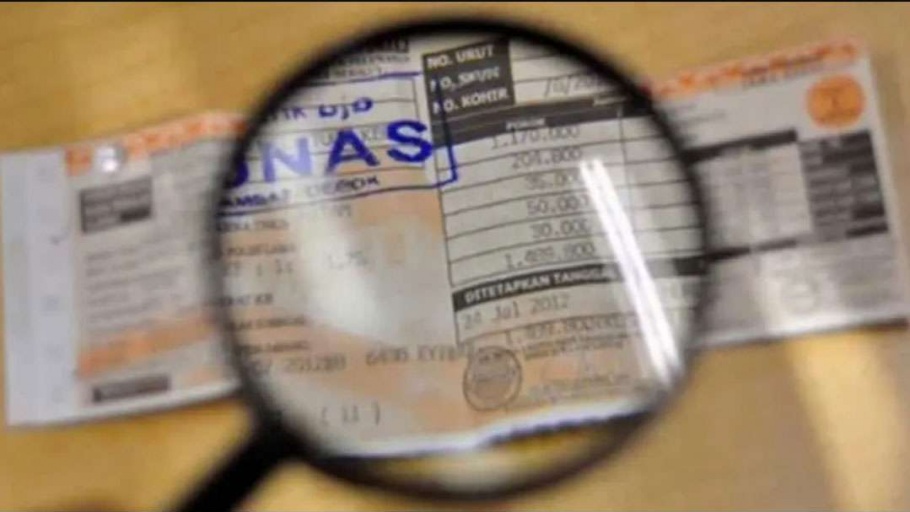
KatadataOTO – Tax amnesty for Banten vehicles officially begins today (10/04) until June 30, 2025. The policy was created to make it easier for the public to pay their obligations as car or motorcycle owners in the region.
This is because they no longer need to pay fines for late tax payments. This is in accordance with the Banten Governor's Decree Number 170 of 2025 concerning the Exemption of Principal or Sanctions for Motor Vehicle Tax.
“This program aims to maximize the potential of regional revenue to finance development. We must be aware that one of the main sources is from motor vehicle taxes,” said Andra Soni, Governor of Banten.
Not only that, he also stated that the Motor Vehicle Title Transfer Fee (BBNKB) II has also been abolished.

"The national policy for BBNKB II has been abolished, so we urge the public to immediately transfer ownership," he later added.
He admitted that his office often receives complaints from people who buy used or second-hand motor vehicles. The public has difficulty paying taxes because they do not have the previous owner's ID card.
“The burdensome BBN II has been abolished, so BBN II is now zero,” he affirmed.
Although it makes it easier for the public, Banten Province's Regional Original Revenue (PAD) could potentially decrease by up to Rp 50 billion due to the motor vehicle tax amnesty policy.
“Yes, it's been adjusted. If you count all the fines, it's approximately around Rp 30 - 50 billion,” said Deden Apriandhi, Acting Head of the Banten Provincial Revenue Agency, as reported by Antara.
Meanwhile, the Banten Provincial Government's PAD target is Rp 11.83 trillion. This consists of a PAD target of Rp 8.31 trillion and a transfer revenue target of Rp 3.51 trillion.

Meanwhile, the realization of Motor Vehicle Tax (PKB) in Banten Province in 2024 reached Rp 3,547,074,053,200 and the Motor Vehicle Title Transfer Fee (BBNKB) tax reached Rp 2,656,532,578,600.
Therefore, his office will try to explore other tax potentials that have not been maximized before.
“We are trying to collect data and bill factories or companies that have not been paying taxes,” he concluded.
Related Articles
13 January 2026, 16:00 WIB
08 November 2025, 13:00 WIB
02 September 2025, 08:00 WIB
15 August 2025, 19:00 WIB
02 August 2025, 12:00 WIB
Latest
02 February 2026, 10:00 WIB
Sales are trailing competitors, and MG declined to elaborate on its sales target for 2026.
02 February 2026, 09:00 WIB
Chery hybrid cars offer more benefits to consumers in Indonesia, making them a popular choice.
02 February 2026, 08:00 WIB
The Police launched Operation Keselamatan Jaya 2026 to curb the number of accidents and traffic violations on the roads.
02 February 2026, 07:00 WIB
Yamaha is confident that the target set by AISI can be achieved this year, with several conditions.
01 February 2026, 17:17 WIB
Toyota FT 86, Vespa Corsa 125, and Toyota Alphard are three of Reza Arap's many vehicles.
01 February 2026, 15:00 WIB
Shell, BP AKR, and Vivo lowered fuel prices for the February 2026 period by varying amounts.
01 February 2026, 13:00 WIB
Toyota Motor Corporation is paying closer attention to its sales in Indonesia, which have significantly declined.
01 February 2026, 11:00 WIB
Toyota group sales break a new record and become the world's best-selling manufacturer in 2025, surpassing Volkswagen.